
Starting with the End in Mind: Creating a North Star for an ALN School in North Wales
If you’re exploring your school’s next strategic plan or want to create a shared vision that genuinely belongs to your staff, I’d love to help. Visual facilitation helps teams think together, build consensus and create strategies that people remember long after the meeting has finished.
One of the most powerful questions you can ask a leadership team is:
“If we were truly successful in three years’ time, what would we see, hear and feel?”
It’s a simple question, but answering it can be wonderfully messy. Ideas emerge from every direction, people build on each other’s thinking, and conversations move quickly. That’s exactly why visual facilitation is so valuable—it captures those ideas as they happen, helping everyone see the bigger picture.
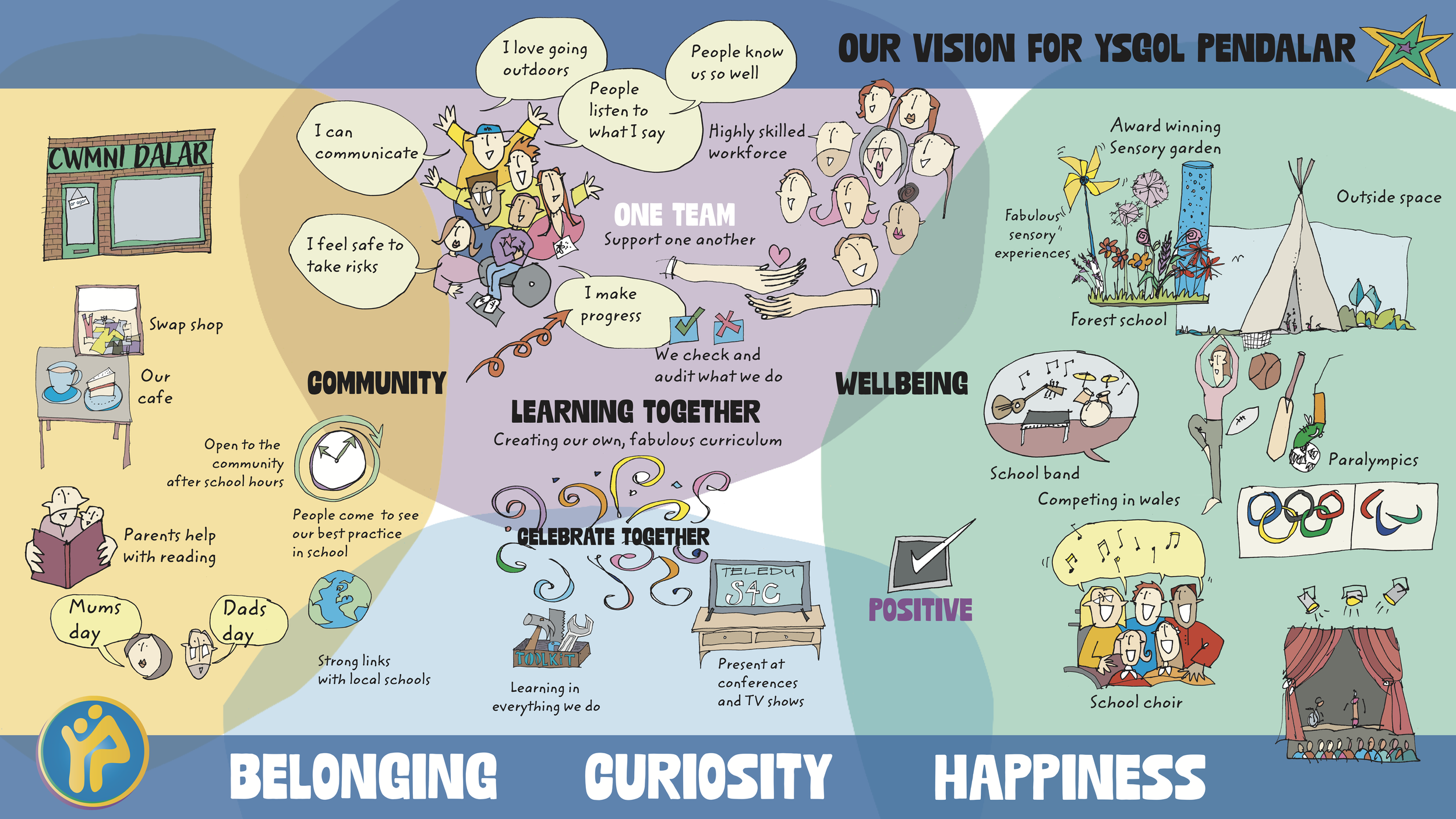
Recently, I had the pleasure of working with the senior leadership team at Ysgol Pendalar, an Additional Learning Needs (ALN) school in North Wales. Together, we explored what success would look like for the school, its pupils, staff and the wider community.
Stage One: Capturing the Conversation
The first stage was all about listening and capturing ideas in real time. As the team discussed their vision, I created a large visual record of the conversation.
At this point, the priority isn’t creating beautiful artwork—it’s keeping pace with the discussion. You’ll notice there isn’t much colour. The focus is on making sure every important thought is captured and that nothing gets lost.
Once the conversation was complete, we reviewed the visual together to check that every key idea had been included.
Stage Two: Finding the North Star
Back at my desk, I transformed the live graphic into a structured North Star—a visual representation of the school’s shared vision.
This stage is where the design work really begins. Looking back over the discussion, I considered how the ideas connected and how they could be organised into a simple framework.
One important change emerged during this process. Originally, children and staff were shown separately. However, reflecting on the conversation, it became clear that the school wanted everyone to be equally valued. Rather than separating them, we combined both into a single theme: One Team. That small change made the whole vision stronger and better reflected the school’s culture.
Stage Three: Making it Bilingual
As a Welsh school, it was essential that the final North Star worked equally well in both English and Welsh.
The wording was carefully translated—not simply word for word, but in a way that ensured the meaning, intent and values remained consistent across both languages.
Why Every School Needs a North Star
Creating a shared vision isn’t about producing another strategy document that ends up on a shelf. It’s about developing a clear, visual direction that everyone understands and can use to guide decision-making.
For schools developing three-year strategic plans, this process creates genuine ownership because the vision comes from the people who will bring it to life.
With increasing emphasis on inclusive education—including the funding available through England’s Inclusive Mainstream Schools Fund—there has never been a better time for schools to think holistically about the future they want to create.
When everyone can see the destination, it’s much easier to decide which path to take.
If you’re exploring your school’s next strategic plan or want to create a shared vision that genuinely belongs to your staff, I’d love to help. Visual facilitation helps teams think together, build consensus and create strategies that people remember long after the meeting has finished.
Ditching the See-Saw: Embracing the Duality of What Matters and What’s Important for you.
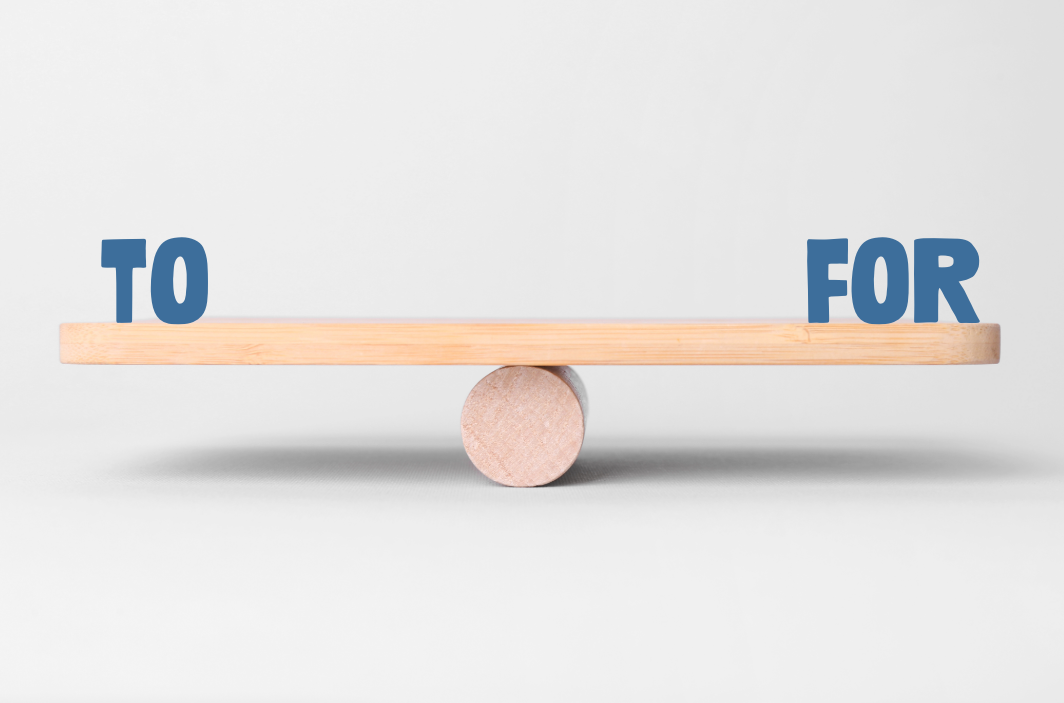
Being person centred and person centred support often has been described like a see-saw, the need for balance between the things that matter to us (important to) and the things that are essential for our health, well-being and safety (important for). I remember showing this see-saw image in my set presentations. An imbalance on the sea-saw shows ‘health and safety dictating lifestyle’ while the converse imbalance shows ‘all choice and no responsibility.’ I think on reflection I’ve got this wrong. I now lean into the thinking of Frederic Laloux and his slightly paraphrased quote ‘it’s not about making everything equal in its power but to make everything fully present and powerful’.
So, when we use the see saw thinking, health and safety dictates our lifestyle - does what matters to us get smaller or have less value? For me, no! The things that matter, still matter. They do not lose their power, worth or value. If I focus on ‘all choice’ I don’t think that keeping me healthy, safe and secure diminishes to ‘no responsibility’. There’s a need for both to be fully present to live full lives. It’s not binary, it’s not one or the other, it’s not a continuum, it’s both. A great expression of this is the organisation Kingdoms Support; Great Support, Great Lives. Four words that make sense in this context.
So it’s not about balancing the see-saw of what matters to you and what’s important for you. It is not about choosing one over the other. It’s about recognising the necessity of both and weaving them into the fabric of your daily life and the support you may receive. I hope that individuals and organisations embrace this duality to lead a life that is not only safe and healthy but also rich with meaning and joy.